



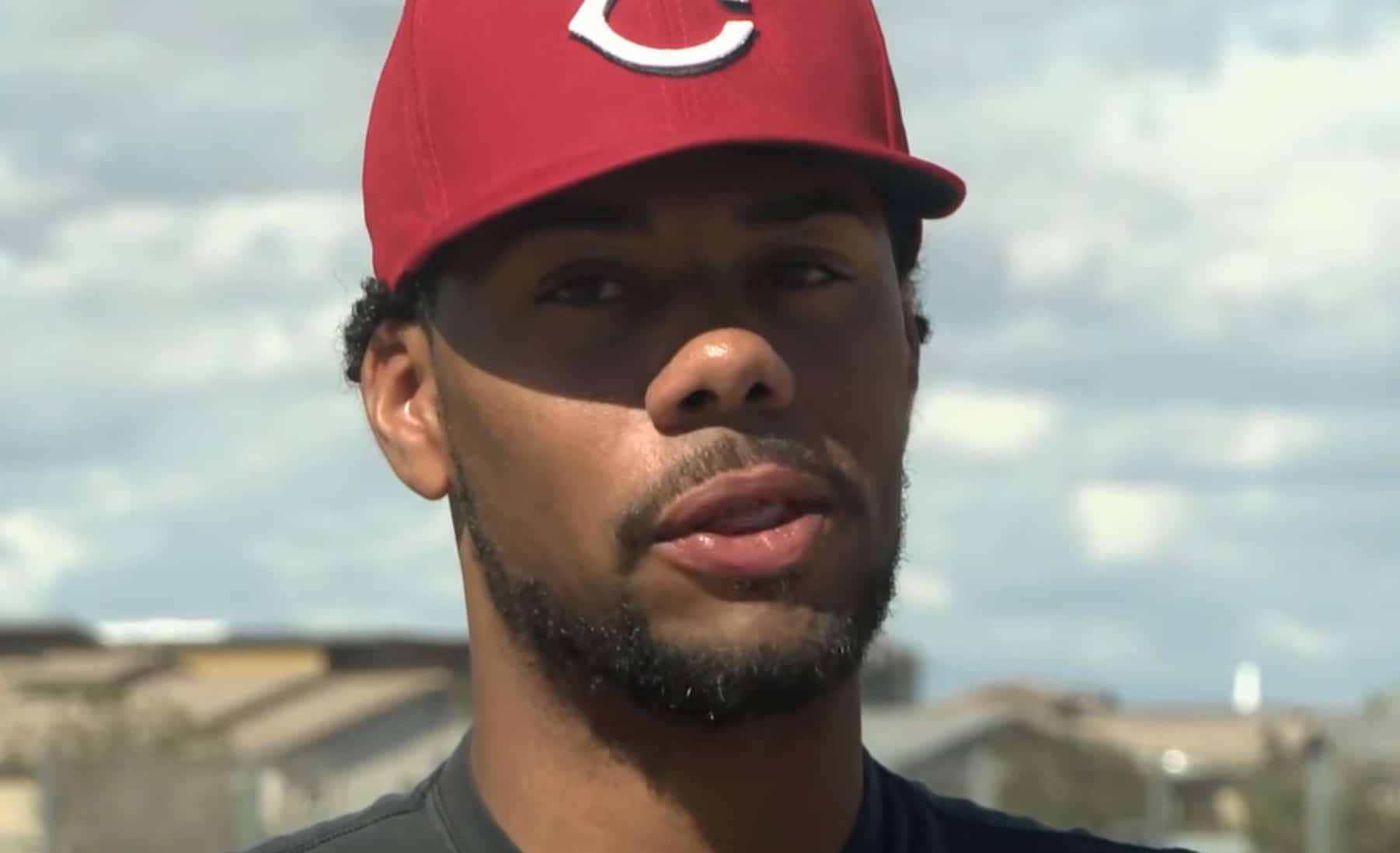
The Cincinnati Reds’ pitching staff has dealt with a significant blow as the full extent of Hunter Greene’s elbow injury has been revealed. While the organization was prepared for the news of a surgical intervention, the specific type of procedure required has drastically altered the timeline for the right-hander’s return to the mound.
Hunter Greene Undergoes Career-Second Tommy John Surgery
Manager Terry Francona confirmed that Greene underwent Tommy John surgery this past Wednesday to repair the ulnar collateral ligament (UCL) in his right elbow. This marks the second time the 27-year-old ace has had to undergo the reconstructive procedure, having previously missed time for the same surgery in 2019 while developing in the minor leagues.
The Reds and Greene had initially hoped that surgeons could perform an “internal brace” procedure, which typically offers a shorter rehabilitation period. However, the medical team determined that a full Tommy John revision was the only viable path forward. This distinction is critical, as revision surgeries are often more complex and require a more cautious recovery approach than a primary repair.
Timeline and Impact on the 2026 and 2027 Seasons
With a projected recovery window of 12 to 18 months, the implications for Cincinnati are profound. Greene is officially ruled out for the entirety of the 2026 MLB season. Furthermore, the length of the rehabilitation process suggests that Greene’s status for the 2027 season is also in jeopardy. Depending on how he progresses through the late stages of throwing programs, fans might not see him in a Reds uniform until midway through or even late into 2027.
Addressing the setback, Francona emphasized a pragmatic approach, noting that the team must learn to adapt to the absence of their primary starter. The loss is particularly difficult given Greene’s recent trajectory toward becoming one of the most dominant arms in the National League.
Tracing the Path to Surgery
This latest surgical requirement follows a season of persistent elbow issues. Greene had already undergone a procedure in March to remove loose bodies and bone chips from his elbow. Despite a return to the active roster, he was limited to just five starts, where he struggled with a 6.83 ERA as he battled lingering discomfort. Subsequent MRIs and evaluations by multiple specialists eventually confirmed that the structural integrity of his UCL necessitated a full reconstruction.
The Void in the Reds’ Future Rotation
When healthy, Greene has demonstrated the elite talent that made him the No. 2 overall pick in the 2017 MLB Draft. He was named an All-Star in 2024 after a breakout year where he pitched 150 1/3 innings and struck out 169 batters. He followed that performance with an even more efficient 2025 campaign, recording a 2.76 ERA and 132 strikeouts before the injury took hold.
The Reds front office had envisioned a future where Greene and rising star Chase Burns would serve as a formidable duo at the top of the rotation. Those plans are now stalled as Greene begins the long road of rehabilitation. Cincinnati will now need to look deep into their pitching depth or explore the trade and free-agent markets to fill the massive gap left by their sidelined ace.
Summary of Hunter Greene’s Injury Outlook
Hunter Greene’s second Tommy John surgery represents a significant hurdle for a pitcher in his prime. While the loss of the 2026 season is a certainty, the Reds’ focus will now shift toward ensuring Greene’s long-term health and a successful eventual return in 2027. For a team building around young, high-velocity talent, Greene’s absence creates a challenging void in the starting rotation that will test the organization’s depth for the next two years.