








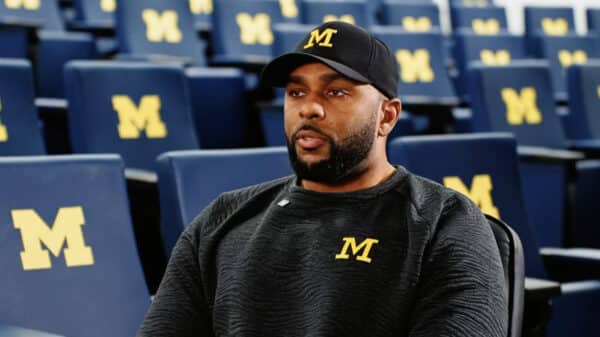




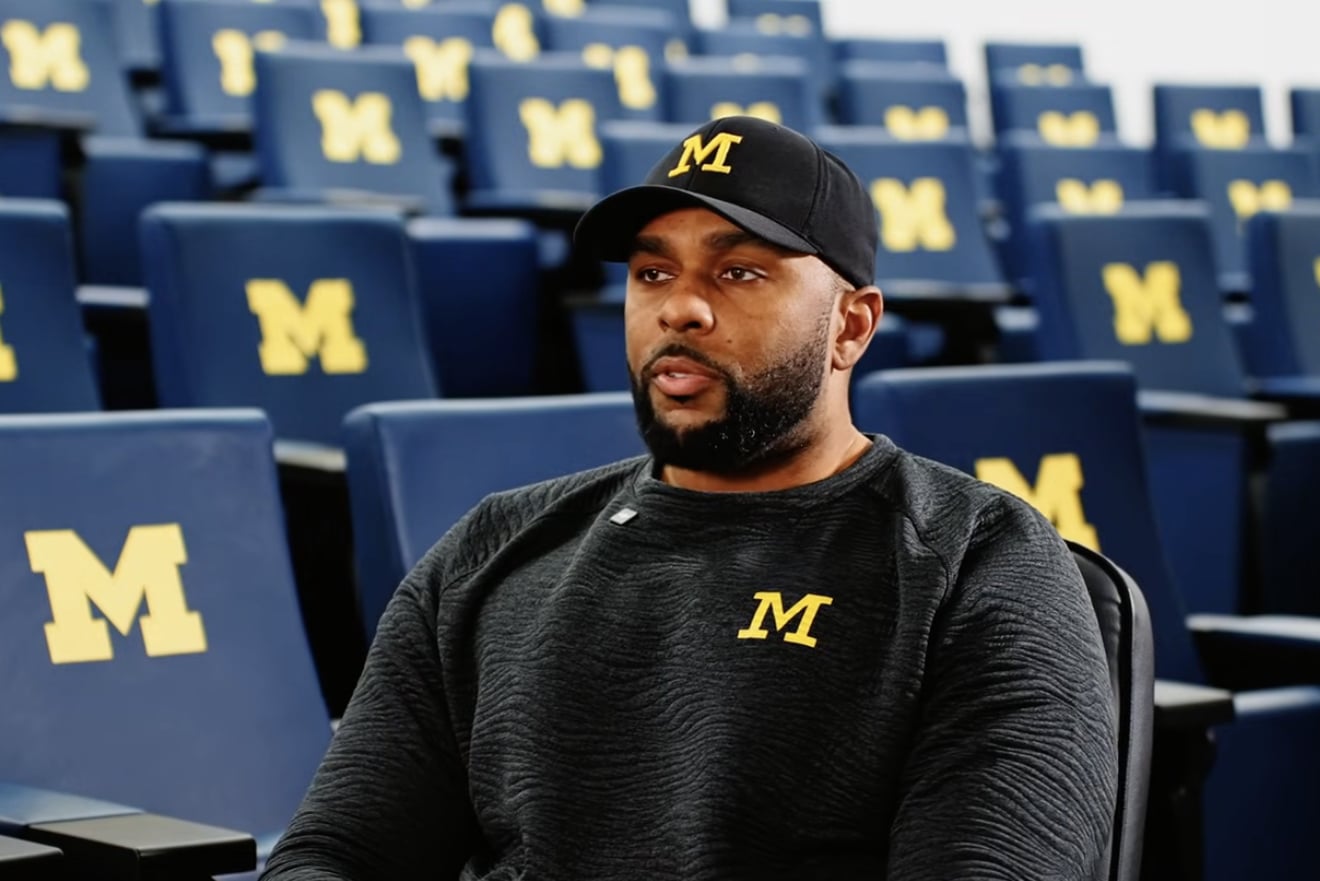
As former University of Michigan football coach Sherrone Moore sat in a Washtenaw County jail cell late last year—after being arrested for felony home invasion and stalking of his executive assistant, with whom he had an extramarital affair—his one-time employer wasted little time getting a move on.
On Dec. 11, a Michigan athletics human resources staffer texted an unidentified representative handling the coach’s affairs while he remained in custody. The subject was not about his arrest, nor the resulting controversy consuming the Wolverine’s football program.
It was his stuff—and what to do with it.
Through a public records request made in January, Sportico recently obtained copies of communications concerning the university’s efforts to reclaim its property from Moore, as well as a detailed inventory of his personal belongings Michigan arranged to have packed and shipped in the immediate wake of his termination for cause. The documents offer an unusually granular accounting of what a college head football coach keeps in his office and, in certain cases, what he leaves behind when his tenure is abruptly cut short.
Among the many of Moore’s items that were ultimately divvied among some 46 boxes: a wedding ring, five whistles, a Bible, money, a police patch, four “OSU kill boards,” a penalty flag, smelling salts, a “Fruit (sic) Loops” box and six bottles of cologne.
Text messages indicate Moore’s representative had initiated the process of retrieving his belongings in the hours after his arrest, and the school was quick to oblige.
A Michigan spokesperson declined to comment, and an attorney for Moore did not respond to an emailed list of questions.
The turmoil from Moore’s Michigan conduct continues to linger, 10 months later, but the process of clearing out his office in Schembechler Hall went remarkably swift. Records show the school was billed $2,170—a relative pittance in the grand scheme of things—for a six-man crew from a local moving company to box up and relocate Moore’s belongings during the 43-hour window of his incarceration. A week and a half later, text messages indicate, Moore’s representative met with the Michigan HR staffer to return his university-issued car, building keys, parking pass and credit card. In the records provided to Sportico, the school redacted the name and identifying details of Moore’s representative and the location where his items were sent.
Upon posting a $25,000 bond, Moore was released from custody on Dec. 12, the day after the delivery. Moore’s former executive assistant, Paige Shiver, later sued Michigan, alleging the university violated the state’s Freedom of Information Act when it denied her request for records from its internal investigation into the coach that preceded his firing. After a Washtenaw County Court judge dismissed the suit, Shiver refiled the FOIA case in Michigan’s Court of Claims last month.
In an interview with ABC News earlier this year, Shiver said that she felt trapped in a years-long relationship with Moore, which began when she was an intern, and denied it to school investigators last fall because she did not trust how the university would respond if it learned the truth.
Clearing out a fired coach’s office has become a routine, almost inevitable, administrative task in college athletics. In Moore’s case, though, the contents of those boxes carried a different weight.
They became, in effect, a time capsule of the former head coach’s professional life, frozen at the precise moment it came to a catastrophic halt. While the university grappled with yet another football scandal, an Ann Arbor moving crew simply got to work—sorting, packing and hauling away the remnants of a fallen career, one item at a time, over the span of six hours.
Many of the contents were exactly what you would expect to find in a head football coach’s office: 36 books, 46 pictures, 21 notebooks and notepads, 10 mugs or cups, 15 binders and 22 folders. There were also 22 footballs, one “Fresno ball”—seemingly from Michigan’s 30-10 victory over Fresno State on Aug. 31, 2024, Moore’s official debut as head coach—two full-sized helmets and four mini helmets.
Mostly, there were clothes. Lots of them.
The inventory listed 67 hats, including a cowboy hat and a beanie; 86 casual shirts; 87 sweatshirts, hoodies and crewnecks; 63 pairs of shoes, including dress shoes, cleats and a single wrestling shoe; 15 suits; 16 dress shirts; 39 pairs of pants; 14 pairs of sweatpants; 33 pairs of shorts; 57 pairs of socks; and two pairs of sandals.
The sheer volume underscored something familiar about the profession, beyond its access to swag: A coach does not merely work in his office. To a significant degree—for better or worse—he lives there.
Mixed among the books, football memorabilia and mountains of clothing were the smaller comforts and necessities of everyday life: a backscratcher, three knee braces, 10 bottles of lotion, four containers of medicine, four pillows and two packages of Dude Wipes.
There was also a bottle of whiskey, six bottles of Coca-Cola and smelling salts of an unspecified quantity.
Moore has publicly endorsed the use of smelling salts by football players, singing their praises in a 2024 Wall Street Journal article about their popularity among UM players during the Jim Harbaugh era. The Journal noted how Moore, then Harbaugh’s offensive coordinator, gave several players hits of the substance during the first quarter of Michigan’s victory over Ohio State earlier that year.
While the NCAA does not ban ammonia inhalants, the NFL moved last year to prevent teams from providing the products to players, citing health concerns, including the risk that they could mask signs of a concussion.
Other entries about Moore’s property raised questions the inventory itself could not answer. The documents provided, for instance, do not specify the type or material of the wedding ring found among Moore’s belongings. Throughout his time in Ann Arbor, Moore had typically been seen wearing a black silicon band, including on the day of his arrest, according to police body-camera footage. Presumably, this was a different ring.
Then there was the entry for “money.” Michigan listed a quantity of 301, though it does not clarify whether that represented a total dollar amount or individual bills. One thing is clear: he would have a lot more now had he not been fired.
Moore pleaded no contest in March to two misdemeanor charges as part of a deal with county prosecutors that allowed him to serve 18 months of probation instead of jail time. In exchange for his plea, prosecutors dropped third-degree felony charges of home invasion, stalking and breaking and entering.
In July, law firm Jenner & Block released “general details” of an investigation it had been commissioned to perform by UM, reportedly at a cost of $12 million, of the athletic department’s culture and policies. The findings prompted athletic director Warde Manuel to announce he would resign at the end of this year, giving him a generous, six-month runway to figure out what to do with all the stuff in his office.