








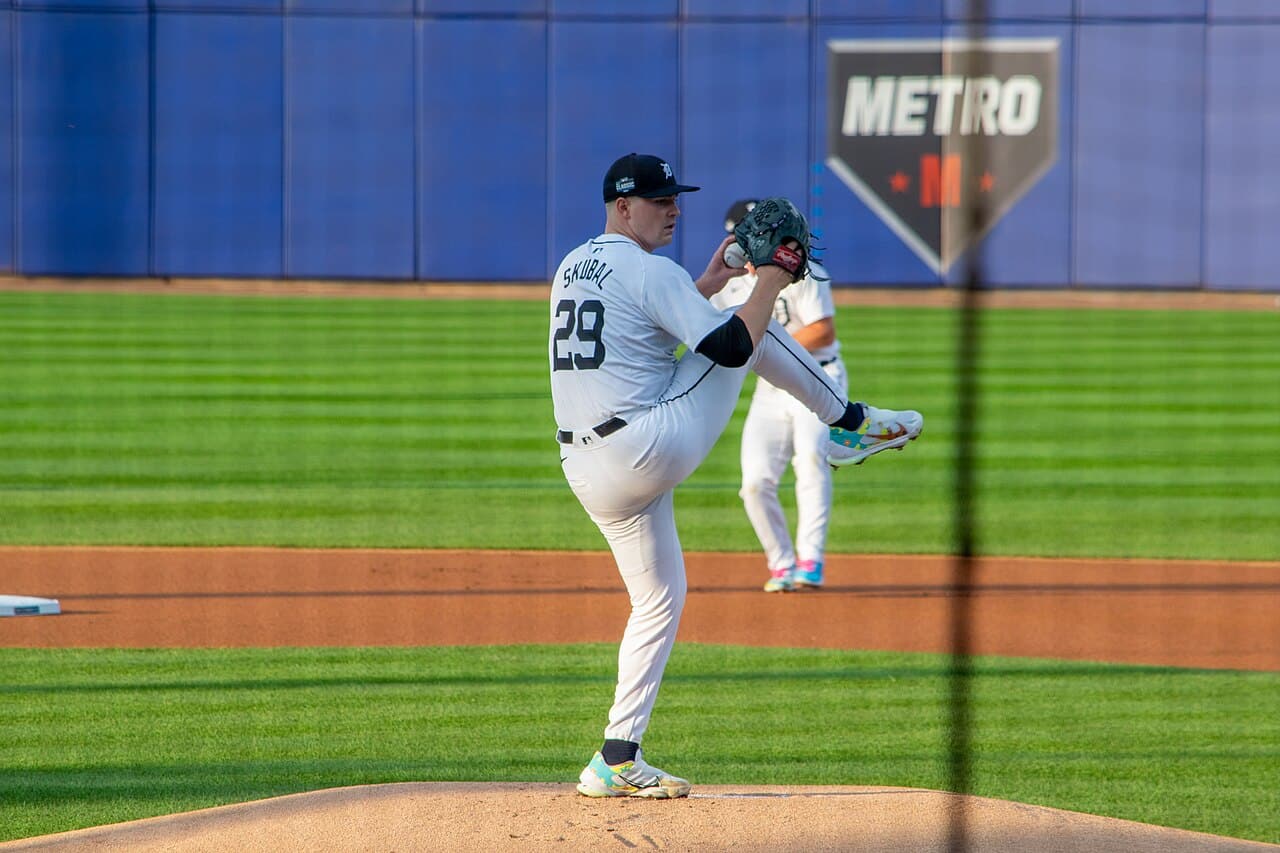
Tarik Skubal’s staggering nine-year, $450 million contract with the New York Mets serves as a prime example of the exact type of mega-deal that Major League Baseball’s proposed salary cap intends to eradicate.
Proposed Restrictions on Free Agent Contracts
Under the league’s latest collective bargaining agreement proposal, a strict ceiling on contract sizes would be introduced. For athletes switching organizations, agreements would be limited to 15% of the total salary cap, paired with a maximum yearly salary bump of 5%.
During the inaugural season of a capped environment, this restriction means no incoming player could pull in more than $40 million per year. As a result, the largest free-agent package designed to pull a star away from another club would initially max out at five seasons and roughly $213 million—less than half of what Skubal ultimately commanded.
“The easiest way to circumvent a salary cap is to have really, really long contracts,” MLB executive vice president for baseball operations Morgan Sword noted to reporters. “That’s something that we learned from the experience of the other leagues, and something that in a cap system you need to regulate very strictly.”
Labor Negotiations and Team Spending Dynamics
As ongoing labor discussions loom over the winter meetings, alongside the possibility of a work stoppage as early as December 2, high-spending MLB clubs might ramp up their investments before any new cap regulations are officially adopted and implemented. At the same time, players remain strongly opposed to any restrictions on what big-budget franchises like the Mets and Dodgers can spend on their rosters.
On the other hand, the owners of those high-spending organizations appear receptive to a complete overhaul of the sport’s financial structure. Dodgers owner Mark Walter highlighted the necessity for competitive balance back in March, while Mets owner Steve Cohen admitted in July that he “effectively wants to be saved from himself” regarding a potential salary cap structure.
As a component of this suggested economic reform, elite clubs even seem prepared to surrender a portion of their local media revenue sharing, which would shift extra funds toward small-market organizations.
Record-Breaking Deals and Market Realities
Skubal, who was dealt to Los Angeles in August, entered the winter as the top available free agent, despite league sources previously projecting his market value to peak near $355 million.
While awaiting an official announcement, his $450 million pact sets new MLB benchmarks for both total worth and average annual salary for a pitcher. The previous standard for a hurler belonged to Yoshinobu Yamamoto via his 12-year, $325 million deal with the Dodgers. Meanwhile, Skubal’s new teammate, outfielder Juan Soto, holds the title for the largest overall contract in baseball history through his 15-year, $765 million agreement extending through 2039. Interestingly, despite maintaining the league’s second-highest luxury tax payroll at $366 million in 2026, the Mets finished the year at the bottom of the NL East with a 74-88 record.
A two-time Cy Young Award winner, Skubal has participated on the MLBPA executive subcommittee following his election in 2024. He earned a $32 million salary for the 2026 campaign after a record-setting result through the league’s mandatory arbitration procedure.
Other notable free agents projected to land major agreements this winter—potentially prior to any newly agreed-upon collective bargaining agreement—feature Japanese slugger Teruaki Sato, versatile pitcher Freddy Peralta, and outfielder Randy Arozarena.
The Core Debate Over Player Compensation and Value
MLB’s proposed framework for a salary cap is built to redirect financial priorities toward younger athletes earlier in their careers. Based on figures supplied by the league, players with more than six years of MLB service time claimed 69% of total player earnings in 2026 while accounting for just 29% of on-field production. Sword pointed out that athletes generating actual wins are currently undervalued, noting that the league also aims to encourage star players to stay with the teams where they started their careers.
Conversely, MLBPA leadership has vigorously challenged the league’s rationale. Bruce Meyer, the interim executive director of the players’ association, contended that the pro-cap position stems from an intent to suppress player earnings, maximize owner profits, and elevate franchise values at the direct expense of past, present, and future players.
Conclusion
Ultimately, the current economic landscape continues to produce historic financial rewards for elite talent, as highlighted by one of the most dominant pitchers in the game securing a precedent-setting agreement.