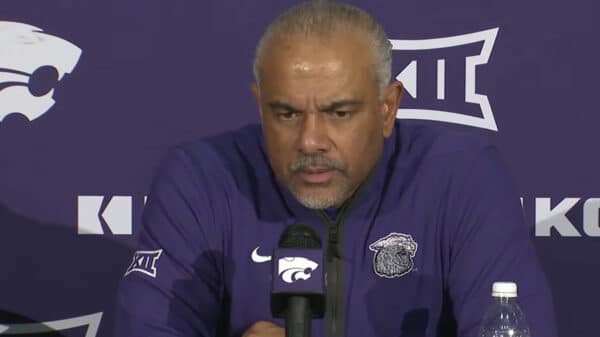



Nearly two decades after his first appearance on the NBA’s grandest stage, Mike Brown found himself in a familiar setting with a vastly different perspective. In June 2007, a 37-year-old Brown led a young LeBron James and the Cleveland Cavaliers into San Antonio for Game 1 of the NBA Finals. Fast forward to the 2026 Finals, and Brown—now 56 and at the helm of the New York Knicks—returned to that same arena, reflecting on a coaching journey marked by dismissals, championships as an assistant, and a renewed sense of emotional balance.
Throughout his career stops in Cleveland, Los Angeles, Golden State, and Sacramento, Brown has worked to cultivate a more “even-keeled” demeanor. However, the intense pressure of Game 1 of the 2026 NBA Finals proved that even the most seasoned veterans can lose their cool. Early in the contest, Brown found himself embroiled in heated exchanges with lead official Scott Foster’s crew, a lapse in composure for which he later expressed regret.
Brown admitted that his focus wavered during the first half, noting that both he and his players spent too much energy complaining about officiating rather than staying present in the moment. Despite his experience coaching Finals games for the Warriors in Steve Kerr’s absence, Brown acknowledged that the emotions of the night briefly got the better of him.
Overcoming Physical Play and Officiating Friction
The Knicks’ frustrations stemmed from several high-stakes non-calls in the first half. The tension peaked when star guard Jalen Brunson was involved in two separate physical plays: a collision with Harrison Barnes and an incident where he turned his ankle on Luke Kornet’s foot. While Brunson was left visibly hobbled, no whistles were blown, fueling the New York bench’s ire.
The atmosphere was charged with aggressive gestures and vocal protests from the Knicks’ coaching staff and players alike. In a pivotal moment of leadership, it was assistant coach Rick Brunson—who played for the Knicks during their 1999 Finals run—who stepped in to stabilize the head coach. Rick Brunson bluntly instructed Mike Brown and the rest of the roster to stop focusing on the referees and redirect their energy toward the game.
This internal intervention proved vital. Brown credited the wake-up call for allowing the team to move past their frustrations and execute their game plan more effectively in the second half.
The Knicks’ Resilient Second-Half Turnaround
Entering halftime with a 55-48 deficit and trailing by as many as 14 points in the third quarter, the Knicks needed a spark. While not as statistically improbable as their 22-point comeback in the Eastern Conference Finals, their rally in San Antonio was a testament to their mental toughness. By the end of the third period, the game was deadlocked at 76.
In the final frame, Jalen Brunson and OG Anunoby took control, combining for 25 points to pull away for a 105-95 victory. Brunson, who finished the night with 30 points, emphasized the team’s “next-play” philosophy. He noted that while the team would prefer not to fall behind, their ability to remain composed under duress allows them to weather opposing runs and find ways to win.
Summary of Knicks’ Game 1 Victory
The Knicks’ Game 1 win highlights a significant evolution for Mike Brown and his squad. By moving past officiating grievances and relying on the veteran leadership of the coaching staff, New York demonstrated the poise required to win on the road in the Finals. As the series progresses, maintaining that mental discipline will be just as crucial as their execution on the floor. For Brown, the return to San Antonio served as a reminder that while the settings may stay the same, the growth found through years of experience is what ultimately defines a championship pursuit.