








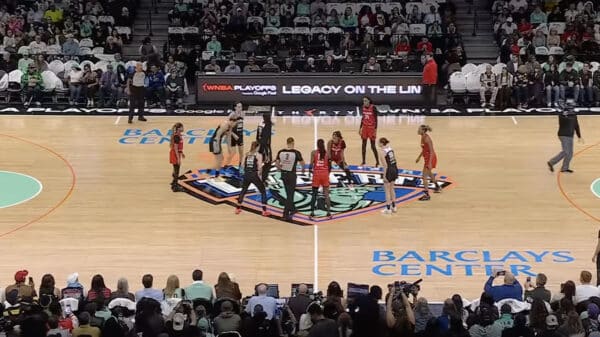



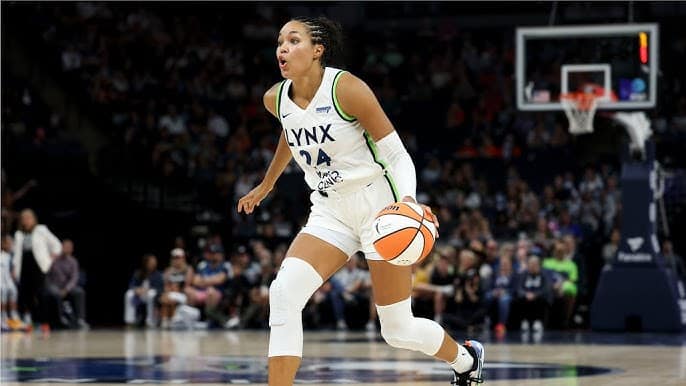
The WNBA has undeniably entered a phase of remarkable growth, making waves in everything from television ratings and attendance figures to sponsorships and franchise valuations. This surge has not only benefited team owners and stakeholders but also stirred the ambitions of the players, who are now advocating for a fair share of this success. With the collective bargaining agreement (CBA) set to expire at the end of 2024 and players having opted out to signal their desire for significant change, discussions are heating up.
A particularly contentious issue in these negotiations revolves around soaring expansion fees. As WNBPA President Nneka Ogwumike aptly pointed out, there’s a stark contrast between the hefty $250 million expansion fees and the absence of transparency regarding how these funds impact revenue shares allocated to players. “It’s puzzling,” she stated in an interview with the Associated Press. “Given the growth we’re witnessing, it just doesn’t add up. We’re eager for answers, especially during our time in Indiana.”
In the larger landscape of North American sports, expansion fees typically benefit current owners, leading to an expanded revenue pool. However, the WNBA operates under a slightly unique framework. Currently, team owners hold just 42% of the league, with the NBA claiming an equal stake while a 2022 investment group controls the remaining 16%. Expansion, in this case, primarily dilutes the ownership interest of WNBA teams, complicating how fees are distributed among existing stakeholders.
During the recent WNBA All-Star Weekend, over 40 players gathered for a pivotal meeting between the league and their union in Indianapolis. Conversations about achieving a transformative CBA abound, but there’s a palpable sense of discontent among players regarding the responses they’ve received.
The statement from the WNBPA underlines their dissatisfaction: “The WNBA’s counter to our proposals doesn’t align with the fundamental priorities we’ve articulated from the start. We’re seeking a transformational CBA that grants us a rightful share of the business we’ve helped build. We need better working conditions and assurances that the successes created today will also support future generations.”
If the WNBA aims to secure a portion of the expansion fees, it would mark a significant shift in standard practices, one that has yet to be established in major leagues like the NBA, NFL, and NHL. Typically, these leagues maintain strict regulations regarding how expansion fees factor into revenue distribution, excluding them from calculations that establish payroll boundaries. The WNBA’s current model only allows for the sharing of “incremental” revenue, which is far from the broader revenue sharing that players are advocating for.
Other leagues, including NWSL and MLS, similarly remain silent on the issue of expansion fees in their CBAs. Instead, they determine salary cap figures based on fixed deal terms, permitting caps to rise with the achievement of certain incremental revenue milestones.
It’s important to recognize that the NBA, NFL, and NHL are far more established leagues than the WNBA. In fact, the only recent franchise additions in the NHL were the Vegas Golden Knights and Seattle Kraken, meaning discussions around expansion fees are not as pressing. Meanwhile, the WNBA has seen rapid expansion over the past year, with teams launching in Golden State and Toronto in late 2023 and May 2024, alongside another addition in Portland for a $75 million fee. Recent announcements highlight three cities—Cleveland, Detroit, and Philadelphia—that will each enter the league by paying a whopping $250 million each.
Drawing parallels to MLS provides further context. Since its inception, MLS had its own rapid expansion, starting with a modest $10 million fee in 2007 and ballooning to a staggering $500 million for this year’s 30th team. Similar to the WNBA, it transitioned from a single-entity structure to one where individually-owned teams can thrive on their own merits.
The ongoing facility upgrades in both leagues signify a critical juncture. Just as MLS capitalized on its expansion to boost investments in stadiums, the WNBA is also battling for improved facilities to elevate the league and its teams to new heights.
In closing, the WNBPA’s resolve is clear. “Our struggle is not complicated,” their statement emphasized. “We are dedicated to pursuing our goals, committed to re-entering dialogue, and we will not relent until we secure the transformational CBA this moment demands.” The stakes couldn’t be higher, not just for current players, but for the future of the league and the generations of athletes to come. The narrative of the WNBA continues to evolve, intertwining ambition, growth, and the essential fight for equity within the sport.
Image Source: NBA Africa @ YouTube