


When Tymir Jones received a text from a company called NIL Club, he initially dismissed it as another phishing scam, a common occurrence in today’s digital world.
“I was skeptical due to their referral requirement,” Jones shared in a recent phone call. “You have to refer five people from your contacts just to get started.”
Despite his initial hesitation, Jones decided to push through the enrollment process, and he couldn’t be happier with his choice. As a member of Cleveland State University’s esports program, operating through the College of Engineering, he successfully earned over $10,000 through NIL Club. The platform’s marketplace app has been his primary source of income, enabling athletes to participate in a variety of brand sponsorship campaigns.
Jones now holds the title of overall points leader on the NIL Club, a position he maintained until Central Michigan football player Jayson Philpot-Dixon broke his record earlier this January.
“It’s straightforward and convenient,” Jones explained, “almost like having an agent working on my behalf for NIL deals. While you still have to put in some effort, I have a busy life and prefer not to juggle more responsibilities.”
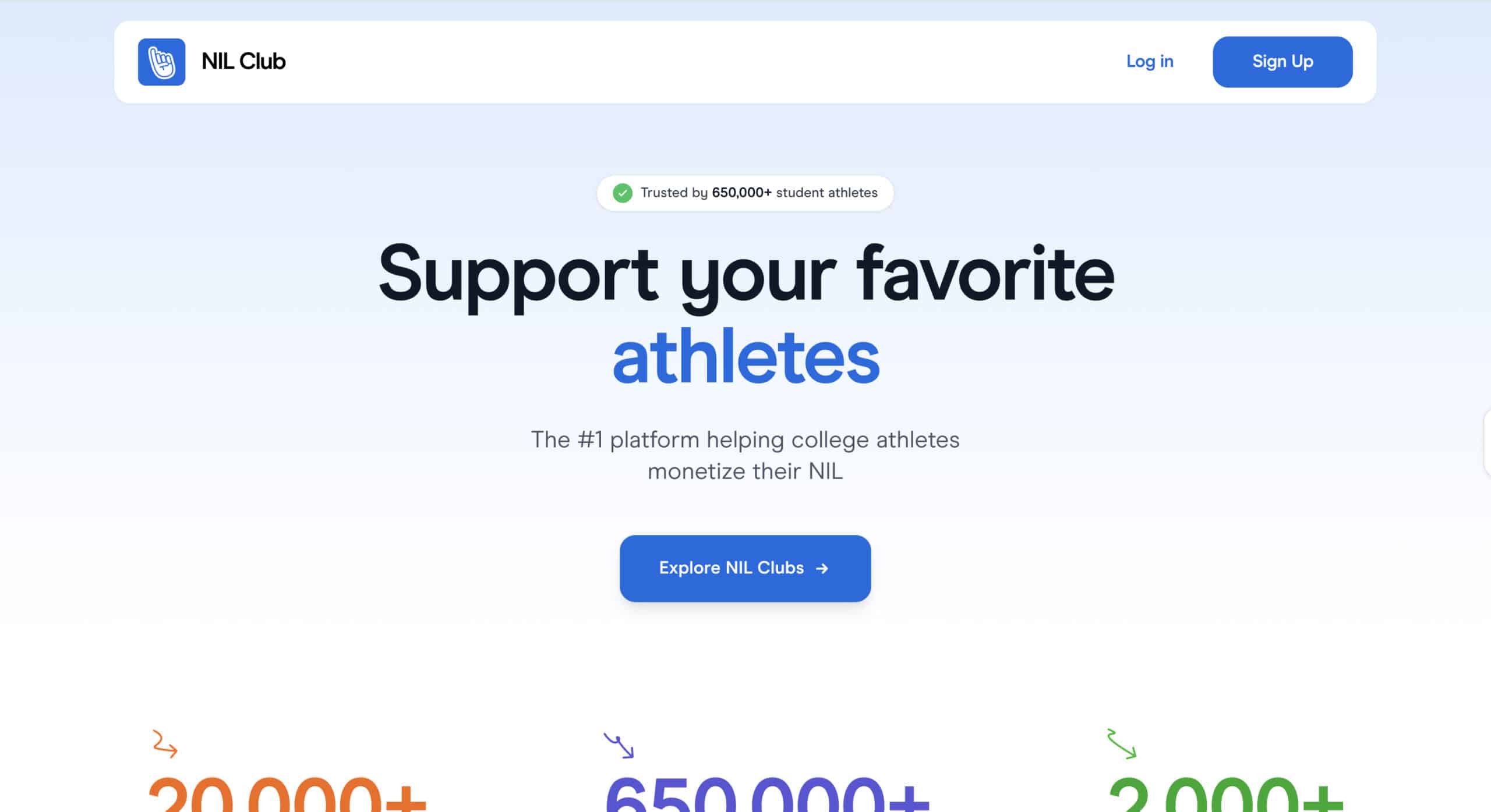
NIL Club provides two main features. Beyond the marketplace that connects athletes with brands, the company runs a subscription-based network of team-specific clubs where earnings are shared equally among athletes.
Founded by childhood friends Mick Assaf, a former Notre Dame football player, and Bailey O’Sullivan, an ardent Auburn supporter, NIL Club has become a key part of their enterprise, Yoke.
Unlike many startups that surfaced at the start of the NIL era and struggled to maintain traction, NIL Club has flourished, boasting 650,000 athlete users who have collectively garnered $16 million through their platform.
So what accounts for this success? By focusing on student-athletes from smaller colleges and non-revenue sports, the platform has managed to stay under the watchful eyes of regulators like the NCAA and the College Sports Commission’s (CSC) NIL Go clearinghouse, which oversees NIL deals greater than $600 annually.
Assaf highlighted that while concerns exist, the vast majority of NIL Club transactions involve earnings that fall below the $600 threshold or athletes outside the scope of the House v. NCAA settlement.
He affirmed that NIL Club is not aimed at high-stakes sports and remains uninterested in being a workaround for revenue-sharing limitations set by the House settlement.
“The model isn’t effective for that,” Assaf stated. “Athletes operate in a unique ecosystem here, and schools have little control in our setup. We prioritize the athlete experience.”
Assaf conceived the idea for NIL Club during the COVID-19 shutdown in 2020. After recruiting teammates from Notre Dame as early users, he quickly brought notable names like running back Kyren Williams and free safety Kyle Hamilton on board.
“Our mission was to assist those overlooked by agents,” Assaf mentioned. “We wanted to help athletes build cash flow from brand partnerships and other avenues.” However, they soon discovered that many of these paths lacked substantial markets.
A feature allowing athletes to charge fans to play video games with them briefly gained popularity, but even that yielded modest financial returns for many, often limited to a few hundred dollars. “Eventually, most opted to game with their friends instead,” Assaf noted.
Initially, NIL Club also offered software for several NIL collectives associated with Power Five programs, but this approach soon revealed its challenges.
“This wasn’t aligning with our objectives; it created unnecessary complications,” Assaf explained. “Athletes were not engaging with the content enough, which required more oversight than we initially expected.”
Choosing not to pursue the smallest slice of athletes from high-profile sports, Assaf and O’Sullivan redirected their focus toward the vast pool of non-revenue athletes.
“The numbers were revealing,” Assaf elaborated. “Countless athletes wanted to join. Everyone has a fanbase, albeit smaller than those from Division I programs. Our app caters to those hustling for recognition.”
Currently, over 90% of college athletes on NIL Club participate without revenue-sharing agreements at their institutions.
High-earning teams include South Dakota State football, which shares $3,175 monthly among 80 players (approximately $476 per player yearly), and Iona women’s water polo, distributing $2,395 monthly among 16 athletes (around $1796 per player yearly).
Among collegiate sports, the ten Butler women’s tennis players earn the highest, bringing in $2,100 monthly, figures that fall under the CSC’s NIL Go clearinghouse guidelines.
In contrast, major football programs like Notre Dame allocate only $210 monthly to their 36 participating athletes, which translates to only $5.83 monthly per player.
NIL Club asserts it retains 15% of the income generated from club subscriptions, although it hasn’t released specific figures regarding its incentive-marketing program.
While it steers clear of contentious elements surrounding NIL regulations, NIL Club’s expansion has sparked its share of debate.
Although the company states it doesn’t spam potential clients, their referral-based signup process has drawn criticism as aggressive, particularly when high schoolers received unsolicited texts.
In June 2024, the Florida High School Athletic Association advised athletes not to engage with the platform before new bylaws permitted high school NIL compensation. Similar warnings have come from the Georgia High School Athletic Association regarding Georgia students risking eligibility if they sign up with NIL Club.
Around that same time, the Carson City School District in Nevada alerted its students about NIL Club, labeling it a potential scam. Although after some legal pressure from the company, the district removed its warnings, it remained firm in its concerns.
Assaf clarified that the intent was never for high school athletes to join, but they were invited by college athletes they knew. The misunderstanding surrounding the app’s aim seems to stem from fears of introducing collective models to high school sports.
“In our discussions with athletic directors, we often clarified misconceptions,” Assaf said. “However, we didn’t anticipate the rapid growth among the high school demographic.”
Last year, NIL Club established a waiting list for high school students, awaiting tailored options for them.
“This has addressed our main concern,” Assaf reported. “We need to develop an information task force to ensure clarity during our next product launch.”
While “NIL” resonates strongly in college athletics, Assaf suggests distinguishing high school offerings to prevent any confusion with collective structures.
Doubts about NIL Club have also surfaced on Reddit and the Better Business Bureau’s website, where users expressed concerns about its outreach and overall value.
Nonetheless, NIL Club continues to attract users like Tymir Jones, who appreciates the NIL chances that would typically be inaccessible for a non-varsity esports athlete.
“When you think of NIL deals, it’s mostly about athletes landing huge contracts at places like USC,” he reflected. “NIL Club is significant for individuals like me who are not Division I athletes at major schools, allowing us to earn quickly and comfortably.”